

An important lesson for advertising photographers from David Ogilvy, the greatest adman of all time.
Or, why your business needs an eye patch.

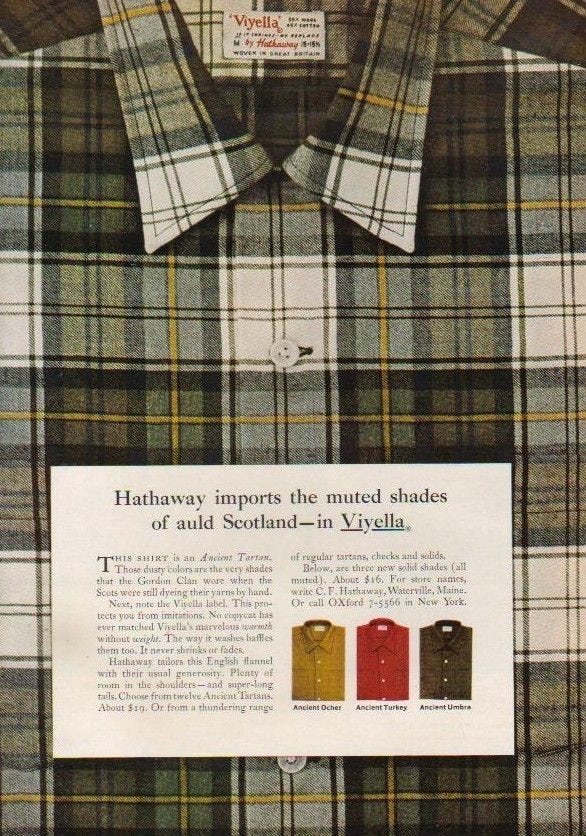
New York, 1951.
A little known adman named David Ogilvy landed a new client called CF Hathaway, a small shirt-maker from Maine. The company were planning to spend just $30,000, a tiny budget with which to compete with much better-known brands with much bigger budgets.
No-one had heard of CF Hathaway.
Or David Ogilvy.
This was about to change.
On his way to the photo shoot for his new shirt-maker client, Ogilvy stopped off at a New York drugstore and bought a few black 50¢ eyepatches.
Handing over the eyepatches to the photographer, Ogilvy told him: "Just shoot a couple with these to humour me. Then I’ll go away and you can do the serious job.”
When he saw the results, Ogilvy said later, "We knew we’d got something."
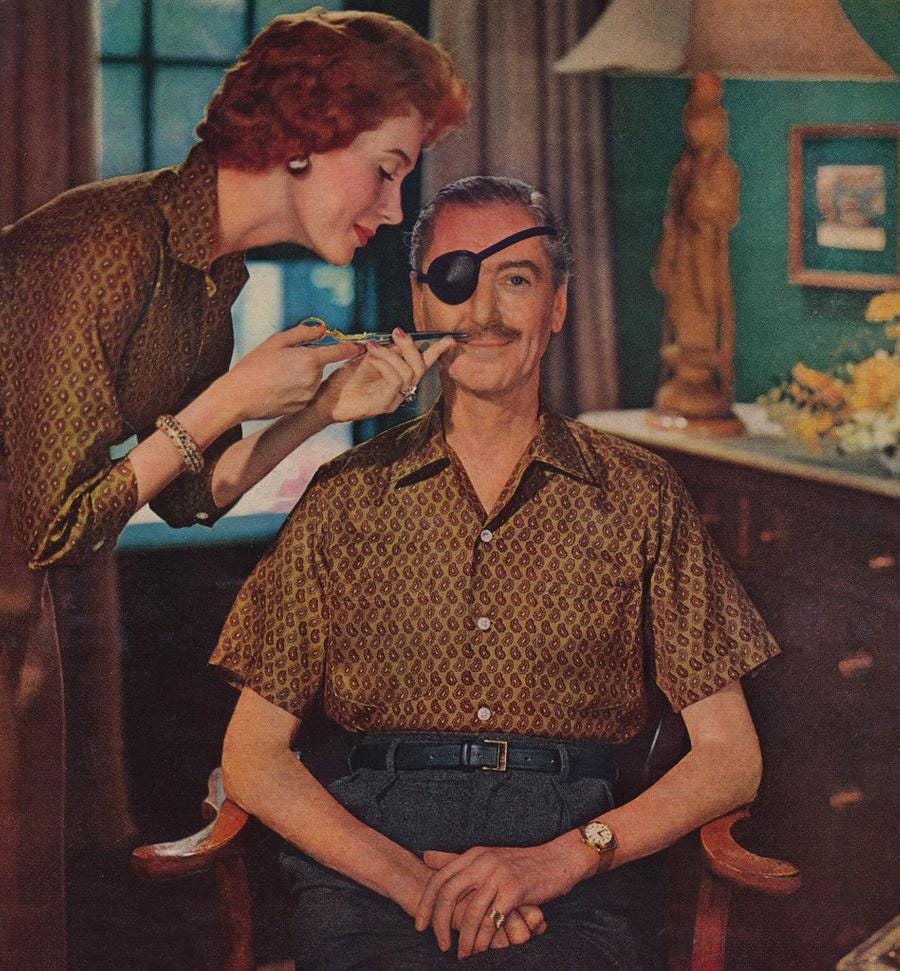
The ad’s impact was immediate. Its first insertion in The New Yorker cost just $3,176. Within a week, every Hathaway shirt in the city was sold.
Without the eyepatch, the Hathaway campaign would have been a simple example of shirt advertising with a well-dressed man shot against an opulent background.
With the eyepatch, the ads had something Ogilvy called "story appeal”. Something that aroused reader curiosity and made them think. How, they wondered, had the man lost his eye?
When they were in the shop, they remembered.
Story sells.
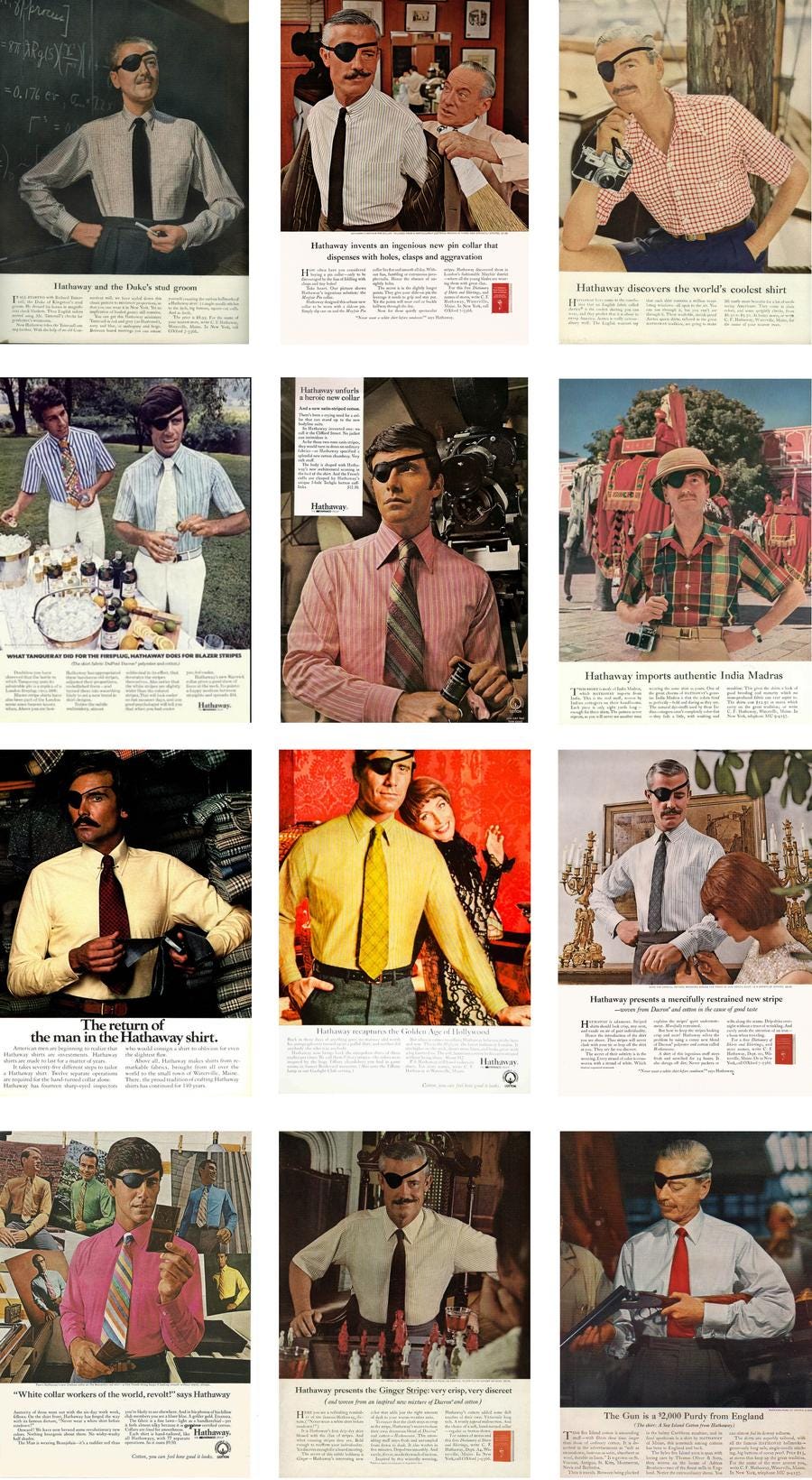
The Hathaway eyepatch man campaign ran and ran and ran. For decades.
Why is this important?
As a photographer, when you create a personal series of images that have “story appeal” you’re giving art buyers and creatives a trigger to remember you by when they’re in buying mode.
It’s also an ad campaign. For you.
Except you’re not buying space in the New Yorker. You’re drip feeding your story out on social media, using it as a credible reason to connect or re-connect your work with clients, entering it in awards etc., etc., etc. By communicating a story with a consistent aesthetic and across a suite of images, you’re showing (not telling) agency creatives that not only can you shoot a campaign but that you’re a storyteller too. Just like them.
Without Ogilvy’s “story appeal” to make the creative difference it’s next to impossible to stand out in a crowded “me too” marketplace.
Why show advertising creatives advertising photography when (like the pre-eye patch Hathaway ads) they’ve seen it all before? Ads are wallpaper for ad folk. Show them photography with “story appeal”.
Another advertising legend, Bill Bernbach puts it another way, he said, “It may well be that creativity is the last unfair advantage we're legally allowed to take over our competitors.”
Telling stories in this way has another important bonus effect.
It tells a story about you, the teller.
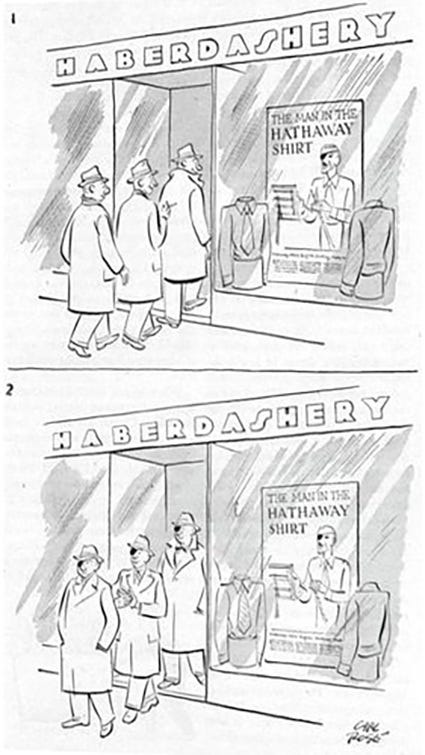
The Hathaway eyepatch man became famous, and took on a life of it’s own. The New Yorker even ran a cartoon showing queues of men walking into a haberdashery and walking out wearing eyepatches.
David Ogilvy said later, “It made Hathaway instantly famous. Perhaps more to the point, it made me instantly famous.”
A series of photographs with “story appeal” is something that can transform subject matter (even if it’s a man in a shirt) into both a memorable sales trigger and a story about the teller.
And a last word from Mr. Ogilvy.
“You cannot bore people into buying your product. You can only interest them in buying it.”
What’s your eyepatch?